

School Anxiety: Signs, Causes, and How Parents Can Help Children Cope
- crystalscottms5
- Sep 23, 2025
- 2 min read
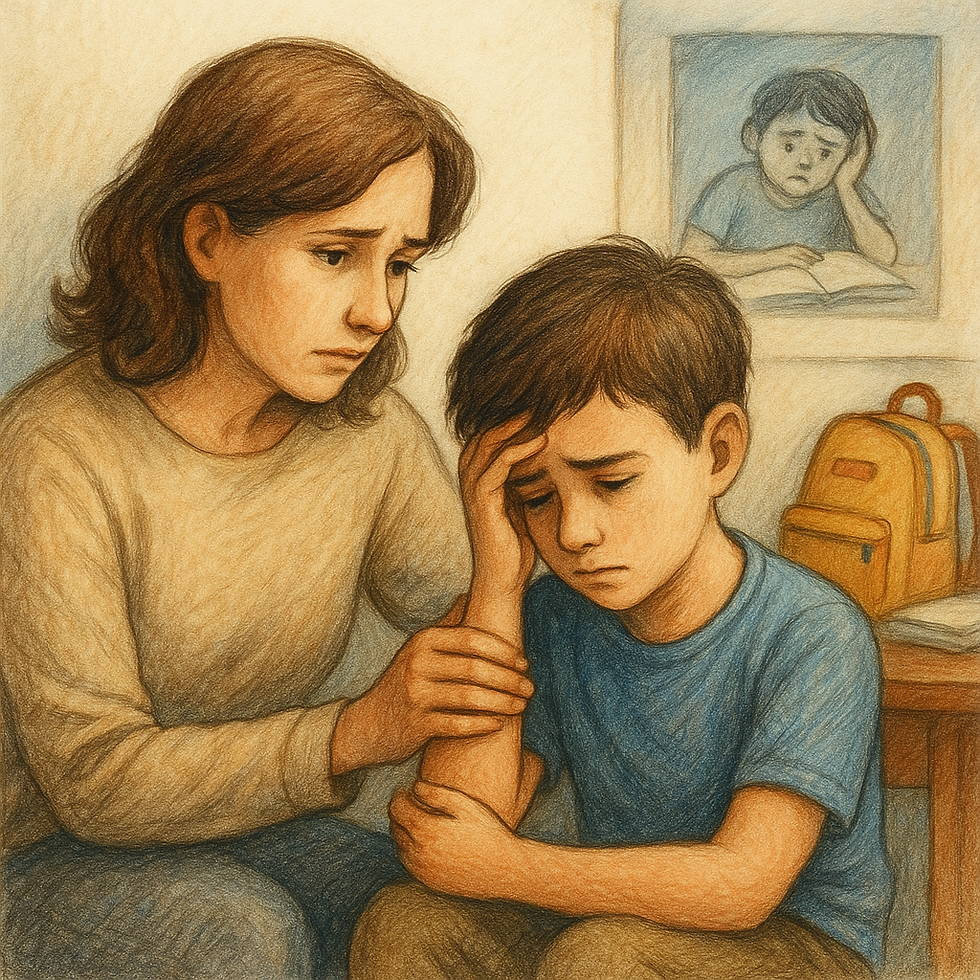
School anxiety is a challenge faced by many children and teenagers. While school should be a place for growth and learning, it often brings stress, worry, or fear that can affect both emotional well-being and academic success.
If your child shows signs of school anxiety, you’re not alone. Below, we’ll explore the causes, common symptoms, and practical strategies parents can use to help their children cope.
What Is School Anxiety?
School anxiety is more than just occasional nerves before a test or presentation. It’s a recurring feeling of worry connected to school-related situations. Children experiencing anxiety may struggle daily, making it hard for them to learn and feel comfortable at school.
Common Types of School Anxiety
Separation anxiety – Fear of leaving home or parents
Performance anxiety – Stress over tests, presentations, or grades
Social anxiety – Worries about making friends, fitting in, or speaking up in class
General school-related anxiety – Constant “what if” thinking about everyday routines
Signs of School Anxiety in Children
Recognizing the signs early can help parents address issues before they become overwhelming.
Watch for:
Frequent stomachaches or headaches on school mornings
Refusal or resistance to attending school
Trouble sleeping or school-related nightmares
Sudden drop in grades or difficulty concentrating
Avoiding friends, activities, or school events
Asking repeated “what if” questions about school
If your child shows several of these symptoms consistently, it may be a sign of ongoing school anxiety.
Causes of School Anxiety
School-related stress can come from many sources. Common triggers include:
Academic pressure and fear of failure
Bullying or social difficulties
Adjusting to a new school, teacher, or classroom
Transition periods (moving from elementary to middle school, etc.)
Family stress or changes at home
How Parents Can Help Children with School Anxiety
Listen and Validate Their Feelings - Let your child know it’s okay to feel nervous. Instead of saying “Don’t worry”, try: “I hear that school feels stressful right now. Let’s talk about what’s bothering you.”
Establish Predictable Routines - Consistent sleep, meals, and morning routines help children feel secure and prepared.
Break Challenges into Small Steps - If your child fears speaking in class, practice at home in small, low-pressure ways. Building confidence step by step reduces fear.
Encourage Healthy Coping Skills - Deep breathing, journaling, physical activity, and mindfulness can help calm anxious thoughts before school.
Partner with Teachers and Counselors - School staff can offer extra support through check-ins, accommodations, or peer connections.
When to Seek Professional Help
If school anxiety is severe, lasts more than a few weeks, or prevents your child from attending school, it may be time to seek professional support. Pediatricians, school counselors, or child therapists can provide strategies and guidance tailored to your child’s needs.
Final Thoughts
School anxiety is common, but with the right support, children can learn to manage it. By recognizing the signs, understanding the causes, and using practical strategies at home and school, parents can help their children feel more confident, capable, and ready to thrive.
✨ If professional help is needed, reach out to The Clarity Collective — we care and are here to help.


Comments